• The word “tinted” suggests more than being colored—it implies a transformation, a dissolving of boundaries between self and the world. As the sea is bathed in the hues of the setting sun, it surrenders its own form and reflects the other. It becomes a symbol of the self in flux, constantly shaped by time and light.
• “Fragments of light” evoke Plato’s theory of forms: in this world, we do not see the perfect light, only its scattered reflections. These fragments, though incomplete, hold beauty in their imperfection. What we perceive in this world is transient and fragmented, yet still meaningful.
• The repetition of “ripple, ripple” and the image of “gentle waves” symbolize the constant motion of existence. Nothing is still—everything flows. This evokes Heraclitus’ idea that you cannot step into the same river twice, reminding us that life is defined by perpetual change.
2. Literary Interpretation
• The poem uses sensory language to paint a vivid image of the sea at dusk, yet beneath the surface, it invites emotional resonance. The title “Seokhae (夕海)”, meaning “Evening Sea,” sets a tone of calm reflection, and possibly a metaphor for the twilight years of life.
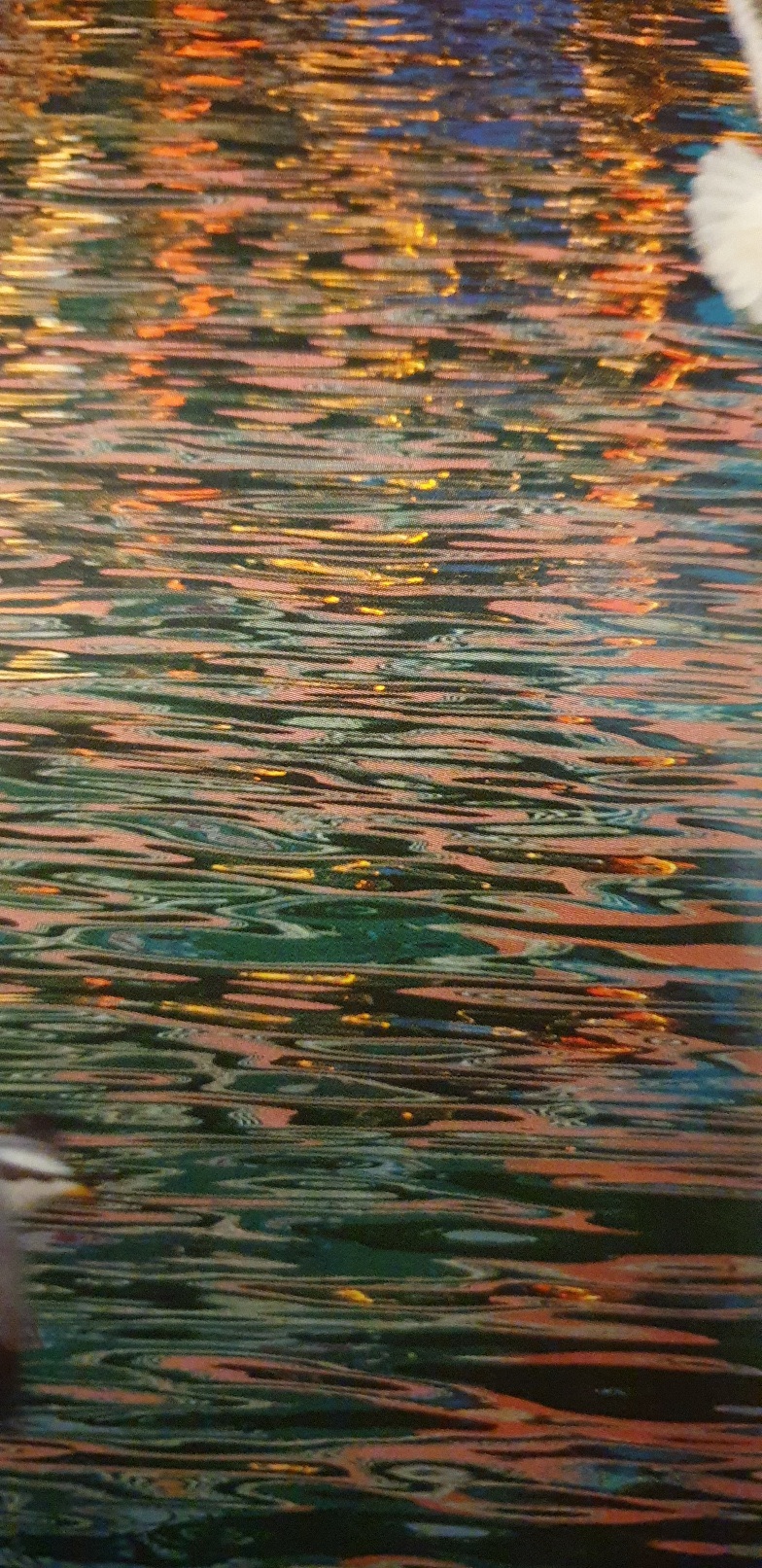
• The photograph shows water reflecting dazzling colors, reminiscent of Impressionist painting. The “fragments of light” in the poem align perfectly with this image, where the sea is no longer just water—it becomes a living canvas of shifting light and emotion.
• The speaker is not merely an observer but becomes part of the scene—touched, tinted, and moved by it. The poem is an act of participation, not just observation. It suggests that we are not separate from nature, but constantly interacting and changing with it.
Summary
This four-line poem, paired with the image, offers a profound meditation on transformation, impermanence, and the quiet beauty of fleeting moments. It encourages the reader to find meaning not in permanence, but in the shimmering, ever-changing reflections of life.
If you’d like, I can also format this as a blog post or help you translate your interpretation back into Korean.


Leave a Reply