
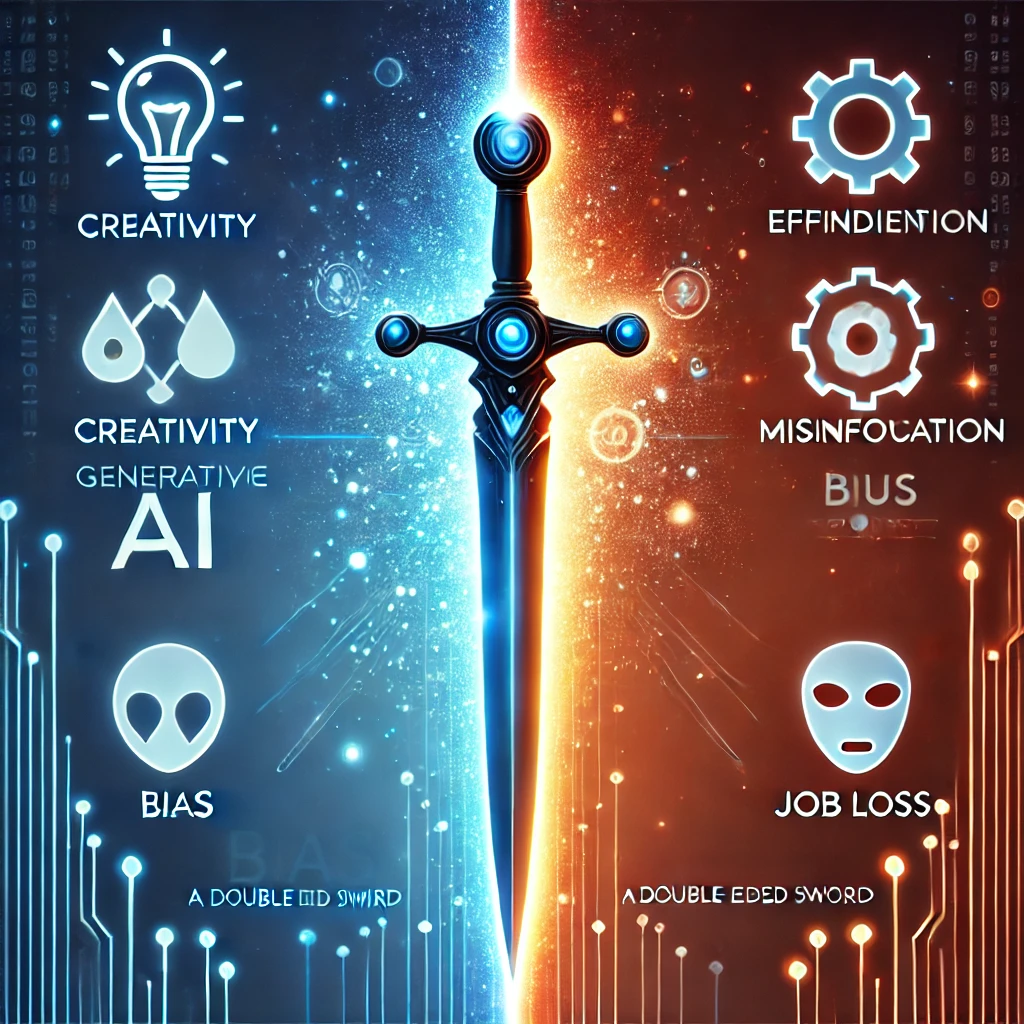
Generative AI is changing the way we work, create, and even think. From automating tasks to generating creative ideas, this technology is proving to be a game-changer. However, like any powerful tool, it has its drawbacks. Let’s dive into the benefits and challenges of generative AI and what it means for the future.
Pros of Generative AI
1. Automation for Efficiency
Generative AI can handle repetitive tasks quickly and accurately, reducing human workload. Businesses use AI to automate customer support, data analysis, and even content creation, freeing up time for more strategic work.
2. Boosting Marketing Strategy Ideas
Marketers are leveraging AI to brainstorm campaign ideas, write ad copy, and even personalize content for specific audiences. AI-driven insights help businesses craft targeted strategies that resonate with customers.
3. Creativity in Poetry and Writing
AI-generated poetry, scripts, and novels showcase its potential in the creative world. Writers use AI tools for inspiration, generating unique narratives, and experimenting with styles they might not have considered.
4. Strong with Words
From writing emails to summarizing long reports, AI excels at language-based tasks. It can generate professional, error-free text in seconds, helping individuals and businesses communicate more effectively.
5. Planning and Organization
Need help planning a project, event, or trip? AI can suggest itineraries, organize tasks, and even provide reminders to keep everything on track. Productivity apps integrated with AI make planning easier than ever.
6. AI as an Assistant
AI-powered virtual assistants like ChatGPT, Google’s Gemini, and Microsoft’s Copilot help users with everything from coding to answering complex queries. These tools are reshaping how we interact with technology.

Cons of Generative AI
1. Credibility and Fact-Checking Issues
AI generates content based on patterns in data, but it doesn’t always verify facts. Misinformation can spread if users don’t fact-check AI-generated content, making it crucial to cross-reference sources.
2. Privacy and Security Concerns
AI tools often require large amounts of data to function effectively. This raises concerns about user privacy, data security, and the ethical use of personal information. Companies must ensure AI tools handle data responsibly.
3. Dependence on AI
Over-reliance on AI could lead to a decline in critical thinking and problem-solving skills. If AI does all the work, humans might lose their ability to analyze and create independently.
4. Ethical Dilemmas
Generative AI can be used to create deepfakes, fake news, and misleading content. Ethical concerns arise regarding how AI-generated content is used and its impact on society.
5. Job Displacement
As AI automates tasks, certain jobs may become obsolete. While AI creates new opportunities, industries must adapt to the evolving job market.

Final Thoughts
Generative AI is a powerful tool with immense potential, but it comes with challenges that need to be addressed. While it enhances efficiency, creativity, and productivity, users must be mindful of its limitations regarding accuracy, privacy, and ethics. As AI technology continues to evolve, balancing innovation with responsibility will be key to maximizing its benefits while minimizing risks.
How do you see generative AI impacting your daily life? Let’s discuss in the comments!

Leave a Reply